Stopping gender-based violence before it starts
Gender-based violence is preventable. We all have the power to shape everyday attitudes and environments that either reinforce gender inequality or challenge it. Learn more to play your part.

Understanding prevention
Responding to violence will always be essential. But if we only respond after harm has occurred, we will never end it.
Prevention work (sometimes also called ‘primary prevention’) means creating communities where respect, equality and safety are non-negotiable parts of everyday life. From challenging harmful gender stereotypes, to building healthier relationships, and strengthening workplaces and institutions — prevention means stopping violence before it starts.
Why prevention matters
Australia continues to face high rates of domestic, family, and gender-based violence with one woman killed by a partner or ex-partner at least every 11 days.
While crisis services remain essential, we cannot solve our way out of this by being reactive. Ending violence requires proactive, long-term investment in prevention, gender equality and the conditions that help everyone live free from violence.
Violence does not happen in isolation. It is shaped by the attitudes, social norms, systems, and inequalities around us. When disrespect, discrimination and unequal power become normalised, violence becomes more likely.
That’s why preventing violence is not about telling individuals to ‘behave better’ or ‘be a good person’. It’s about creating communities where equality, respect and safety are expected, modelled and reinforced from an early age.
Preventing violence takes all of us. Everyone has a role to play.
Our approach to prevention
Every day, we see how violence affects women and families. Those experiences shape the education, advocacy and prevention initiatives we deliver across workplaces, schools, early childhood settings, and communities.
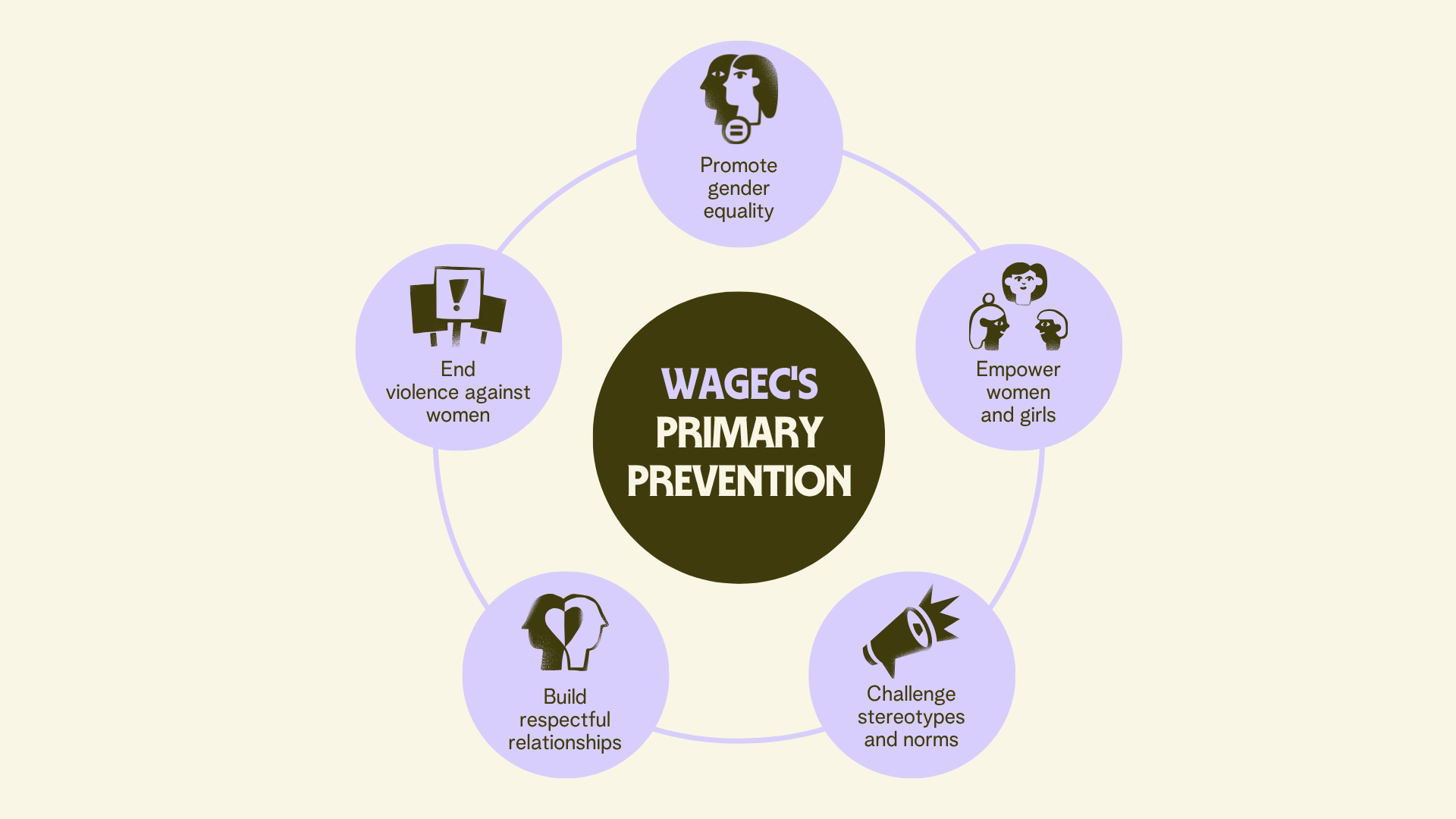
Alongside our crisis and recovery services, WAGEC works to address the attitudes, systems and inequalities that drive violence in the first place. Together, we’re helping create safe futures where women, trans and gender-diverse people, and children can live free from violence.
Questions about violence prevention
Primary prevention describes work that aims to stop gender-based violence before it happens by addressing its underlying drivers, including gender inequality, harmful stereotypes and unequal power.
Gender-based violence describes violence directed at a person because of their gender, including domestic, family and sexual violence. Women, trans and gender-diverse people, and children are overwhelmingly affected. The evidence shows attitudes that support violence such as denying gender inequality is a problem, condoning disrespect or abuse towards women, undermining women’s independence, and promoting rigid gender roles and stereotypes are commonly-held excuses across our society.
The research consistently shows that gender-based violence is driven by gender inequality. When societies value one gender over another, excuse harmful stereotypes or reinforce unequal power, the risk of violence increases. Creating more equal relationships, workplaces and communities helps challenge these attitudes and reduces the conditions in which violence can occur. This is the work of prevention and we can all be a part of it every day.
While gender equality is one of the foundations of violence prevention, gender-based violence does not affect everyone in the same way. First Nations women, women with disability, women from migrant and refugee backgrounds, LGBTQIA+ communities, young and older women and people experiencing poverty or housing insecurity often face additional barriers to accessing safety and support. Prevention means challenging the overlapping systems of inequality that make violence more likely and harder to escape.
An active bystander responds safely to something happening in a public setting. An ethical ally provides ongoing support to a friend, family member or colleague. In both situations, safety must always come first.
Remember: you don’t need to be an expert to act. Learning to safely question disrespect, challenge stereotypes and support people around you makes a real difference. Our free videos and posters explain how.
Creating change across generations

beyond violence.
