16 Days of Real Talk: The powerful campaign sparking conversations with Gen Z where it matters
25 Nov 2025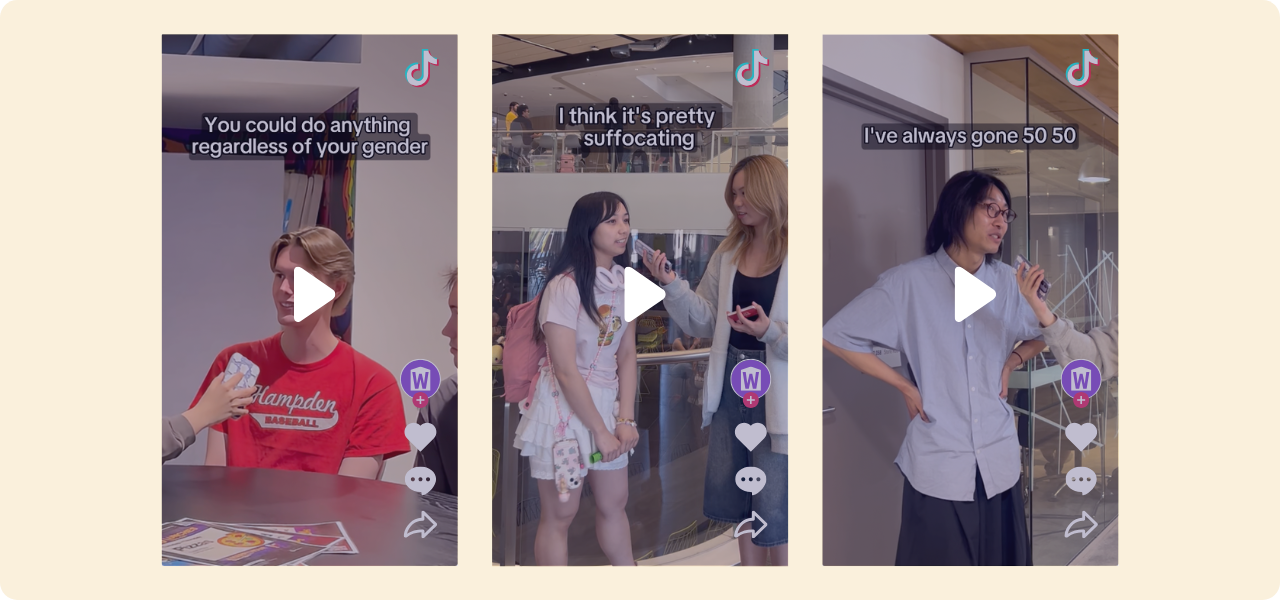
Learn how sexist attitudes are driving gender-based violence and how our new Campus Edition conversation starters are sparking change this 16 Days.
Every young person deserves safety, respect and the freedom to grow into who they truly are.
But right now across Australia, too many are learning something very different: that sexist jokes are normal, that rigid gender roles are expected, and that disrespect and harassment is just ‘part of growing up’.
The latest research makes it clear, in no uncertain terms, gender inequality is showing up earlier and with sharper edges. On university campuses, we are seeing a rise in sexism, harmful attitudes, harassment, and sexual assault, and a worrying resurgence of misogynistic online content shaping attitudes at scale.
These attitudes do not suddenly appear in adulthood. They are learned gradually, and reinforced consistently, through the environments where young people spend most of their time, both online and off.
As part of this year’s global 16 Days of Activism Against Gender-Based Violence campaign, we are shining a light on what is happening in classrooms and lecture halls across the country — and how we can all play our part in shifting it.
Let’s talk about where harmful beliefs start, how we prevent them, and why building gender-equal environments for young people matters now more than ever. Introducing → We Need To Talk: Campus Edition.
Growing up unequal: what Gen Z tell us
When we talk about gender-based violence, the conversation often focuses on adult relationships. But the drivers of this national crisis begin much earlier.
A 2025 study of 1,400 Australian teens, The Adolescent Man Box by Jesuit Social Services, found that:
- A small but significant group of boys strongly endorse rigid masculine stereotypes — and this group is responsible for a disproportionate amount of harm.
- 35% said they would “get back at someone” if they were rejected romantically, revealing entitlement and retaliatory attitudes that echo later forms of abuse.
- Boys who hold these views are five times more likely to use bullying, verbal abuse, or sexual harassment.
- Meanwhile, most boys feel uncomfortable witnessing sexism, but say they do not feel confident intervening.
These patterns do not magically disappear when students step onto university campuses. In fact, they often intensify. Residential colleges, social clubs, online forums, sharehouses, and classroom cultures all play a role in either challenging or reinforcing these beliefs.
Why this matters
Gender-based violence doesn’t just happen – it starts with inequality. When systems treat people differently based on gender, it shapes harmful attitudes and beliefs. Over time, these attitudes make gender-based violence more likely.
Harmful stereotypes and beliefs are reinforced by everyday behaviours, such as:
- Sexist jokes and comments that go unchecked
- Assumptions about what men and women ‘should’ do, or should ‘be’
- Pressure to conform to rigid gender roles, like ‘be a man’ or ‘act like a good girl’
By the time a young person gets out into the world, they may have been absorbing these beliefs for more than a decade. What we know is that gender inequality is learned, repeated and normalised.
The promising news is that also means it can be unlearned. This is the power of prevention. To end gender-based violence in a generation, we must interrupt these beliefs early — not with shame, but with curiosity, conversation and community.
Change has entered the chat
Sexism in classrooms and on campuses is not a problem isolated to ‘young people’. It is a mirror of the world young people grow up in. As a grassroots feminist organisation doing this work since 1977, what we know is that:
- Attitudes can (and do) change all the time
- Conversations can shift cultures
- Prevention works
- Young people are ready for real talk… they just need the structures and support to make it happen.
We need to stem the rising tide of sexism and harassment happening across Australian campuses and stop violence before it starts. How? By having brave conversations.
30 cards, zero lectures
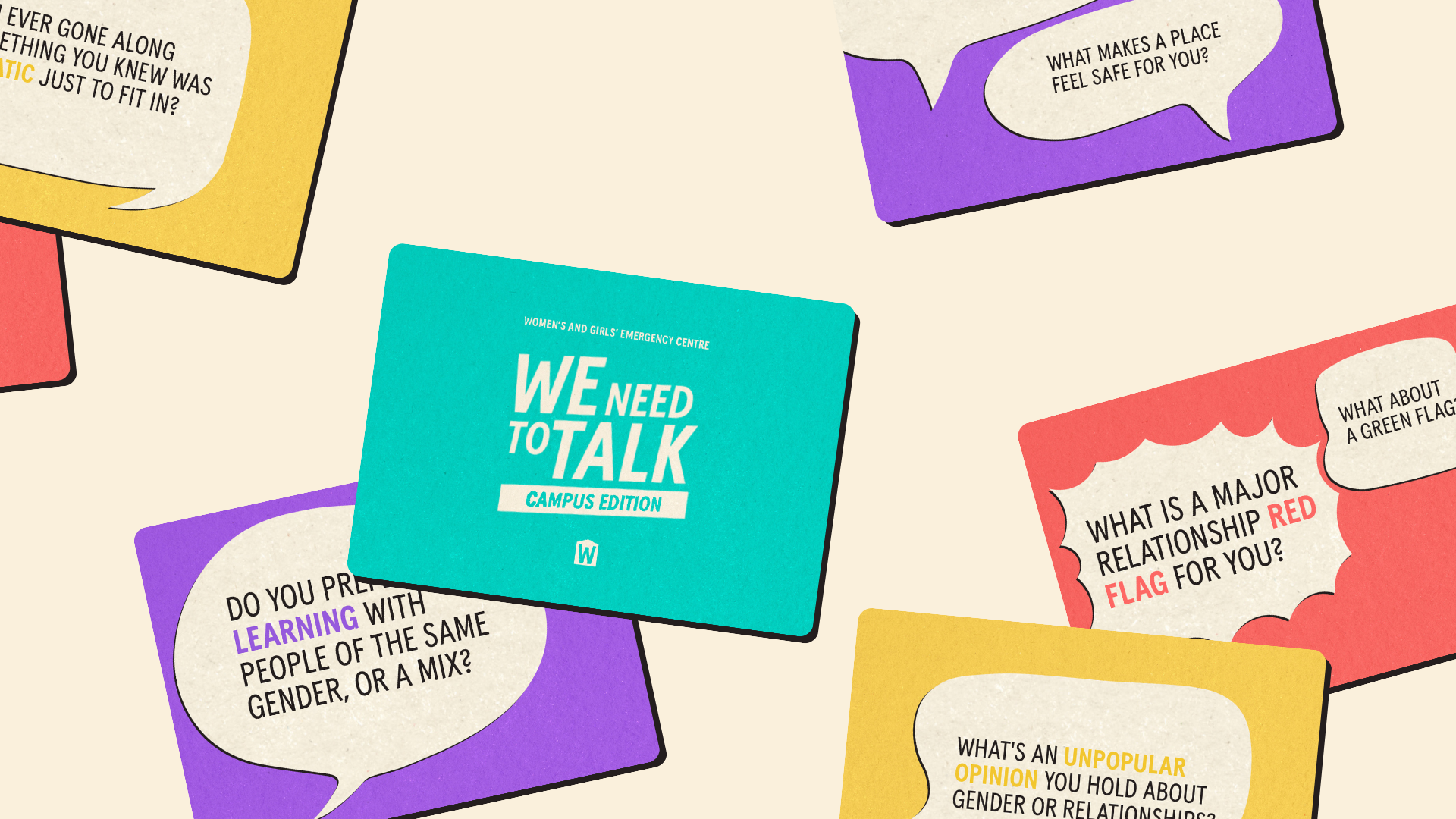
This year for the 16 Days of Activism, we’ve taken our popular ‘We Need to Talk’ guided conversation cards and teamed up with students at the University of Technology Sydney (UTS) to develop a free digital Campus Edition, available to download now.
From “Who always pays for protection?” to “What’s a major relationship red flag?”, they are designed to help young people explore gender, respect and equality in a safe, structured way. They also promote connection and reduce shame in a time when many are feeling disconnected and divided.
Co-designing a more equal future
Made with students, for students, these real talk starters open up the kinds of conversations young people say they want, but rarely get.
Together, we’ve developed resources that reflect their lived experiences: the unspoken rules in tutorials, the everyday sexism on campus, the pressure to stay silent, and the power of speaking up.
Because gender stereotypes aren’t harmless. They shape who gets interrupted, who gets heard, and who gets left behind. They also fuel the very real incidence of sexual harassment, violence and abuse across campuses, online, and in broader society.
“This collaboration has been grounded in respect and co-design from the start, because we wanted students not just to be the subject of the campaign, but to be its architects. The result is a set of tools and conversations that feel real, relevant and actionable — because prevention works best when it’s shaped by the people who need it most.”
— Jean Parker, WAGEC Prevention Coordinator
Join the conversation
If we want to create greater gender equality (and we do), then we need to create space to challenge the assumptions that hold us all back.
Let’s talk. Let’s listen. Let’s act. And we can end gender-based violence in a generation.
💜 Download your We Need to Talk: Campus Edition cards and start meaningful discussions in your classroom, sharehouse or community.
💛 Be part of the conversation on TikTok and Instagram using #16DaysofRealTalk.
WAGEC works across early childhood and young adult environments to address the underlying drivers of gender-based violence. Find out more about our prevention work and get involved →
stories



beyond violence.
